Towards a continuous agentic model of learning and signalling -- powered by memory -- for modern day skills and talent markets
23 February 2026
On this page 2 items
Here is the idea: Thanks to the latest developments in frontier AI/ML, skills (and hence people and jobs) can now be represented as and stored in vector forms. This makes them composable, recombinable, continuously updatable — easy to do maths on. As a result, we can now envision new paradigms in learning and signalling skills that have memory and are continuous.
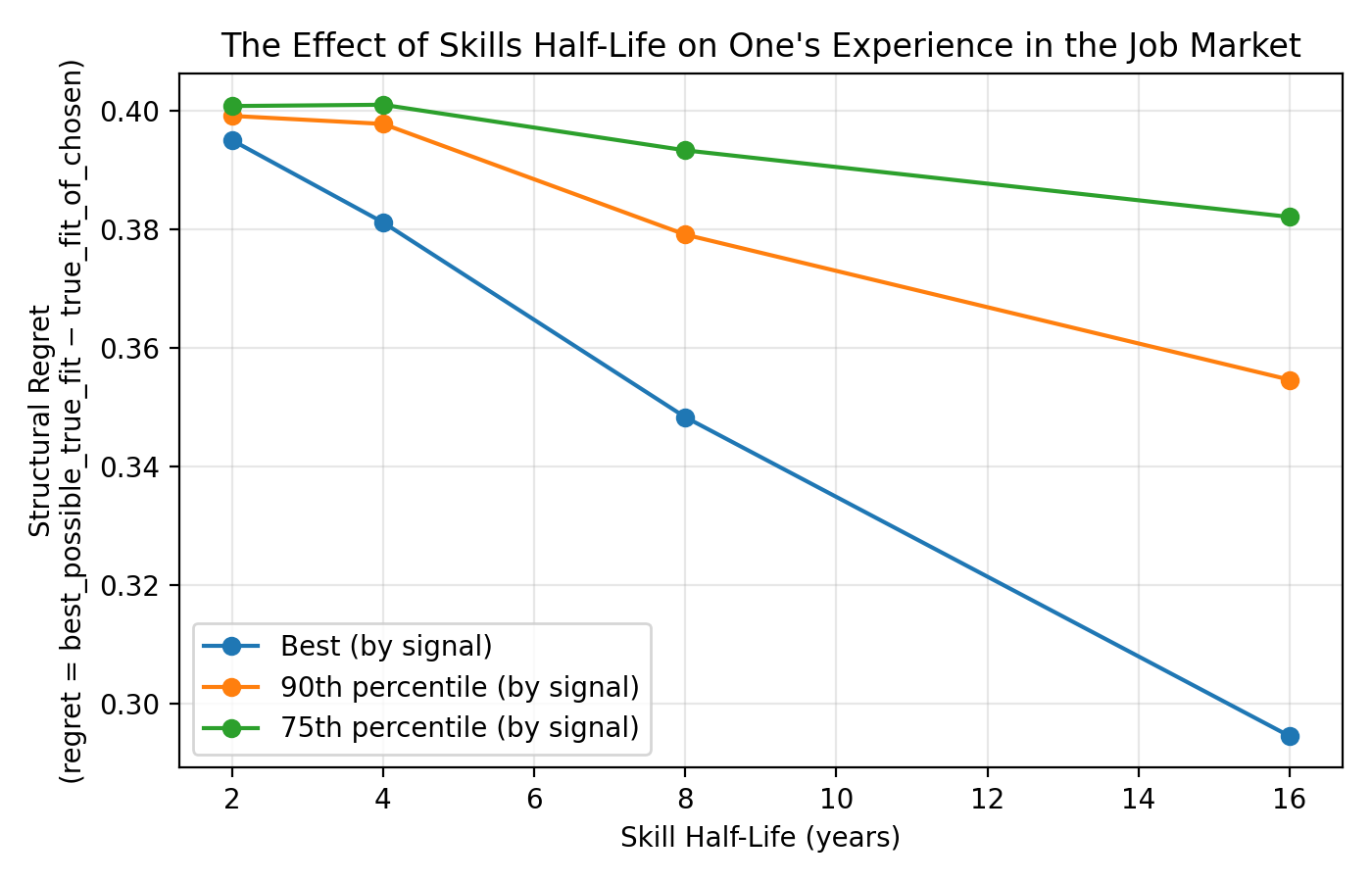
Skills’ half-life is shrinking.
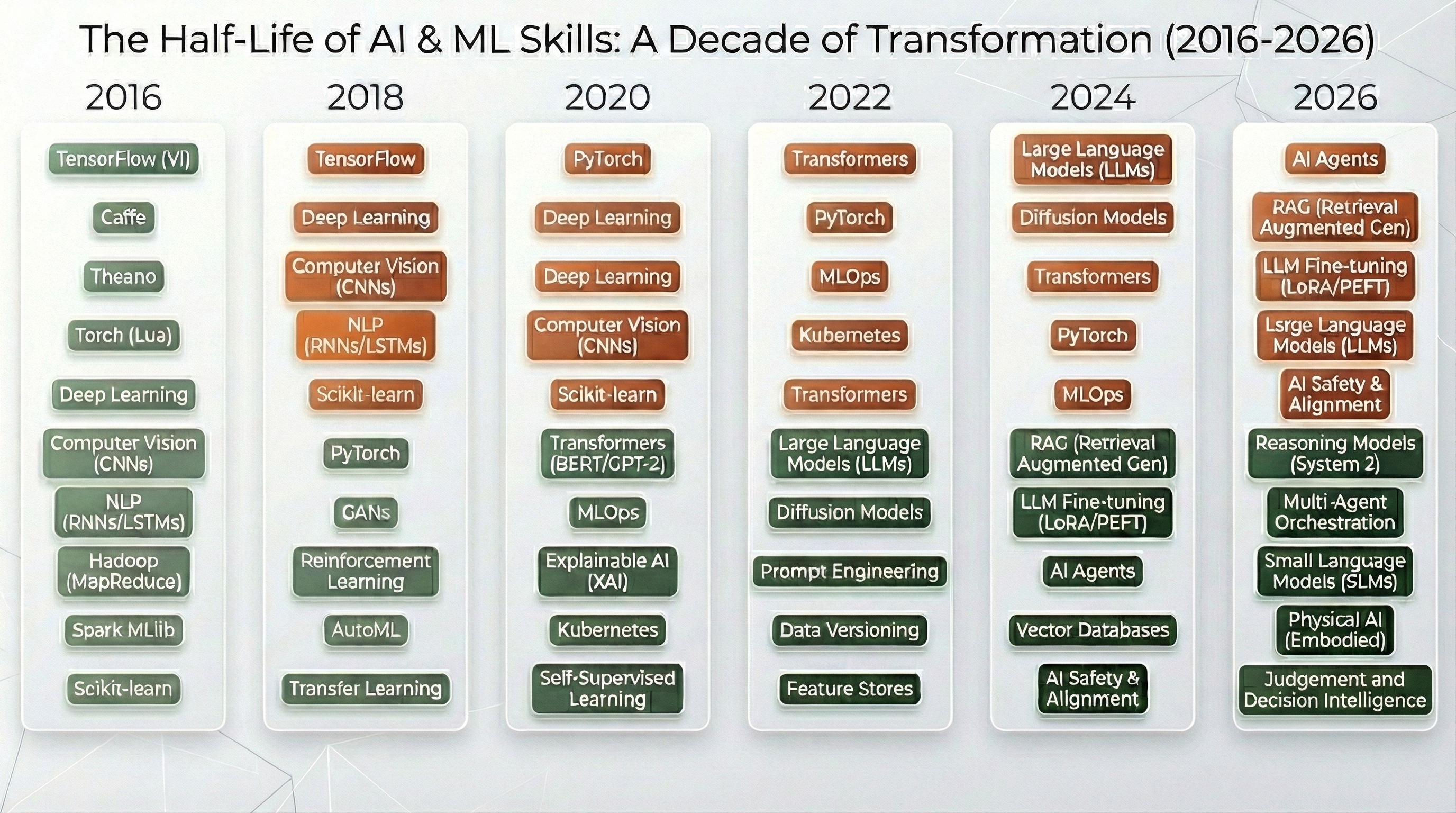
Across tech (incl. AI), the useful life of a skill is drifting toward ~2 years. Many of us in AI/ML have watched the stack mutate in real time — frameworks rise and fall, paradigms flip, entire workflows abstracted away (see the image). Managing memory. Context engineering. Cron/flow orchestration. Tool use. Topics that barely existed in the zeitgeist last year, are now line items in job specs.
And yet our learning and signalling infrastructure behaves as if knowledge and expertise move slowly. Four-year degrees. Multi-month certificates. Static curricula. High cost. Low frequency. Slow feedback loops.
Enter frontier AI
When skills become vectors in a high-dimensional space — composable, recombinable, continuously updatable — learning and signalling can’t remain memoryless and episodic. They must become living systems.
Systems like Elandi are built for this world. They are not about replacing universities or certifications. They are about aligning our L&D infrastructure with the tempo of modern work — where the decay function of skills is measured in years, not decades.