MLx Health & Bio
 Oxford Machine Learning School
In-depth exploration of how the latest advancements in representation learning and generative AI are helping solve critical challenges across healthcare and biomedical sciences, research, and technology.
What you'll be able to do
- 01 Can assess healthcare AI for a defined clinical use, identifying requirements for robustness, fairness, clinical validation, regulation and workflow integration.
- 02 Can compare statistical, deep learning and foundation models for health records and wearable signals, accounting for missing data, censoring, calibration and dataset shift.
- 03 Can justify geometric deep learning and physics-informed approaches for medical imaging, anatomical modelling and biomedical simulation using symmetry, geometry and context of use.
- 04 Can explain and critique AI workflows for single-cell and spatial atlas integration and regulatory variant-effect prediction, including batch effects and cell-type-specific limitations.
- 05 Can evaluate AI approaches to molecular representation, virtual screening, docking and protein structure prediction, identifying data bias and unrealistic benchmarks in drug discovery.
- 06 Can distinguish prediction from causal inference and assess how mechanistic models, digital twins and experimental evidence complement AI in disease research and therapy development.
12 modules, one certification exam
Your learning plan opens in your workspace, with the unit you are on always marked up next.
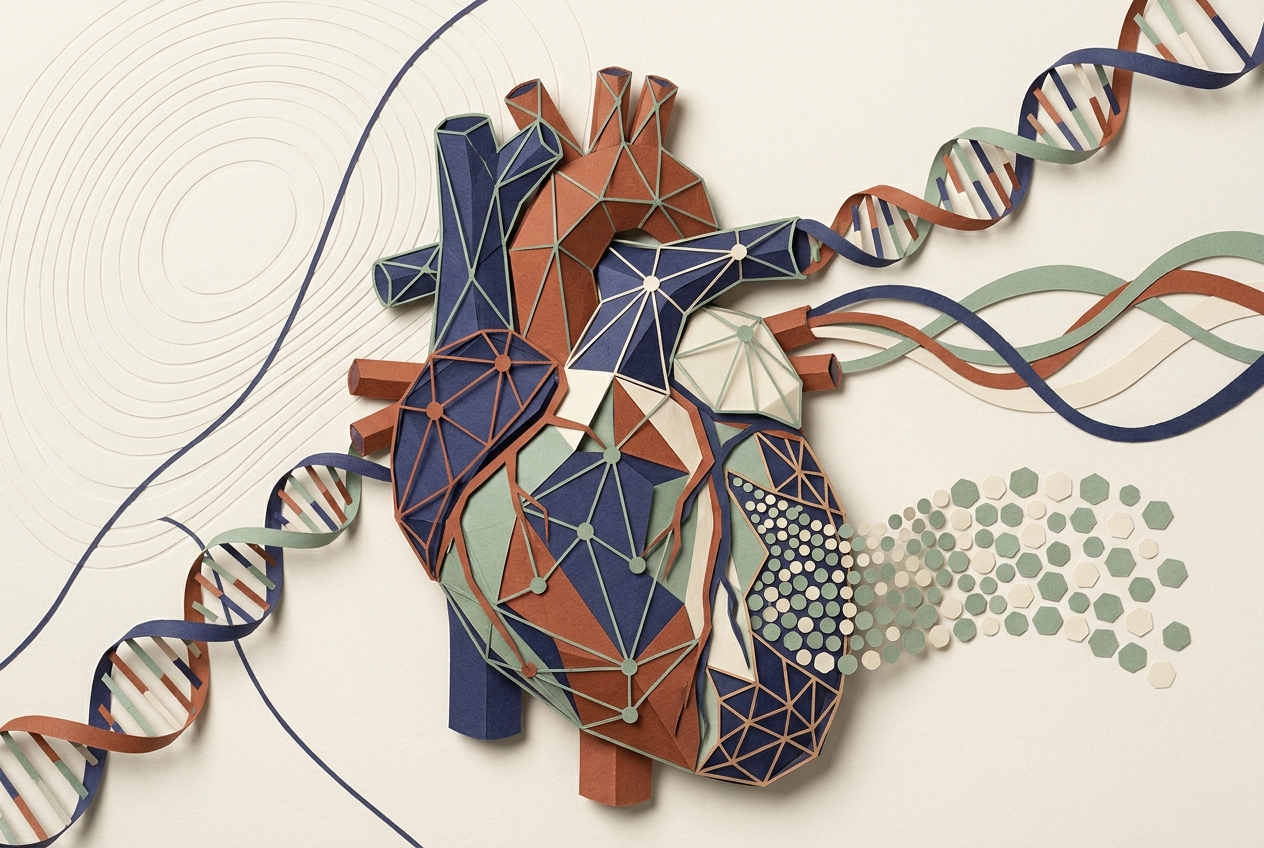
MLx Health & Bio
12 modules 13 units 20h 32m
- Module 01
Building More Robust AI
This module explores how to build AI systems that are more reliable for health and biomedical use. Learners will examine why robust performance matters beyond benchmark accuracy, including prediction instability across training samples and changes between model versions. The module introduces regularization as a way to reduce variance and improve consistency in real-world clinical settings. It also connects robustness to the broader requirements for regulated medical devices, including intended purpose, clinical evidence, quality management, and approval pathways.
1 Unit 1H 37M Application Working- Unit U01 Building More Robust AI Up next
- Module 02
Geometric Deep Learning For Biomedical Modelling & Simulation
2 Units 2H 59M Application Working - Module 03
Human Cell Atlas, Data Science & AI
1 Unit 1H 21M Application Working
Inside the MLx Health & Bio learning plan
12 modules · 13 units· ~21h of structured prep.
- 01
Building More Robust AI
1 unit · ~2h- 1. Building More Robust AI
- 02
Geometric Deep Learning For Biomedical Modelling & Simulation
2 units · ~3h- 1. Pre-reading: AI Applications in Medical Imaging
- 2. Geometric Deep Learning For Biomedical Modelling & Simulation
- 03
Human Cell Atlas, Data Science & AI
1 unit · ~1h- 1. Human Cell Atlas, Data Science & AI
- 04
Can AI Alone Revolutionize the Fight Against Disease?
1 unit · ~1h- 1. Can AI Alone Revolutionize the Fight Against Disease?
- 05
AI for Healthcare Data
1 unit · ~2h- 1. AI for Healthcare Data
- 06
Artificial Intelligence at the Bedside
1 unit · ~2h- 1. Artificial Intelligence at the Bedside
- 07
Learning Machines; And What They Can Do For Medicine
1 unit · ~1h- 1. Learning Machines; And What They Can Do For Medicine
- 08
Geometric Deep Learning
1 unit · ~2h- 1. Geometric Deep Learning
- 09
AlphaGenome: Advancing Regulatory Varient Effect Prediction with a Unified DNA Sequence Model
1 unit · ~2h- 1. AlphaGenome: Advancing Regulatory Varient Effect Prediction with a Unified DNA Sequence Model
- 10
Can AI Transform Drug Discovery?
1 unit · ~2h- 1. Can AI Transform Drug Discovery?
- 11
AI for Routine Health
1 unit · ~2h- 1. AI for Routine Health
- 12
Foundation Models for Wearables
1 unit · ~2h- 1. Foundation Models for Wearables
How the content is written
- Worked examples
- None
- Technical jargon
- None
- Maths & formulas
- None
- Code
- None
- Diagrams
- None
How you certify
Pass the certification exam to earn your certificate.
- Questions
- 50
- Time limit
- 60min
- To pass
- 70%
- Single select (Radio): 4 options
- Multiple select (Checkbox): 4 options
- True / False
- Issued by
- Oxford Machine Learning School OxML
- Certificate type
- Certificate of Completion
- CPD accredited
 Certification number 77710
- Programme dates
- 10 – 13 July 2026
The certificate you earn
Issued in your name, with a verification link anyone can check. Download it as a PDF or add it to LinkedIn from your award page.
Certificate of Completion
MLx Health & Bio
Oxford Machine Learning School · 10 – 13 July 2026
James Wilson
This certifies that James Wilson has successfully completed MLx Health & Bio.
In-depth exploration of how the latest advancements in representation learning and generative AI are helping solve critical challenges across healthcare and biomedical sciences, research, and technology.
Completed hours: 20-hour
CPD Number: 77710Start your MLx Health & Bio certificate.
Start working toward MLx Health & Bio for free today.